

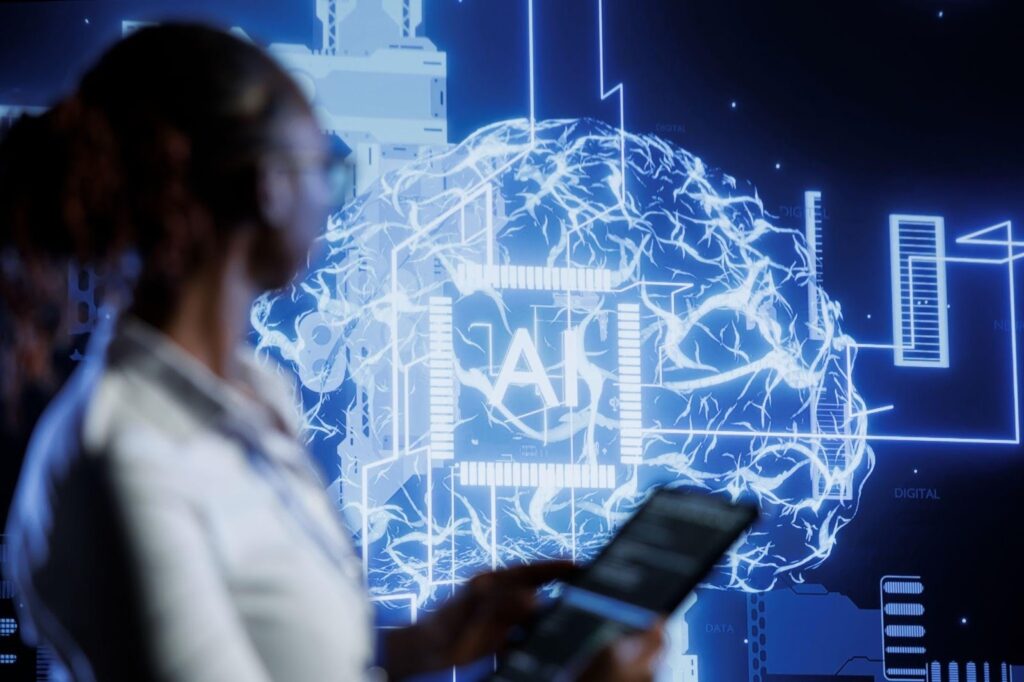
AI‑powered innovation is rapidly reshaping industries across the globe, no longer a distant futuristic concept but a driving force in today’s digital era. From healthcare and finance to logistics, education, and public services, these technologies are revolutionizing how organizations operate, make decisions, and engage with people.
At the heart of this transformation are smarter machines, faster insights, and automated systems that unlock human potential for higher-value work. Let’s explore how this wave of innovation is redefining modern industries and why embracing AI-powered innovation has become essential for success.
Reinventing Healthcare With Precision and Efficiency
Healthcare is one of the most impactful areas in which innovation based on AI can be useful. Rudimentary and isolated forms of medical technologies can be substituted with AI-based diagnostic tools and predictive analytics that are capable of analysing thousands of medical images within a few seconds and uncover patterns that cannot be detected by a human mind. This will enable the detection of chronic conditions like cancer early.
In addition to the diagnosis, AI is used in the course of treatment of an individual, combining the history of the patient and heredity with this activity, with the assistance of real-time research and minimizing errors to a minimum.
Revolutionizing Finance With Smarter Decision‑Making
AI-driven innovation was first adopted in the financial sector. Artificial intelligence is applied to large quantities of data by both fintech companies and traditional banks to predict direction and trends in the market, as well as to enhance investment decisions. Complex algorithms identify latent trends in market movements and provide predictive information that is useful to traders and analysts.
Moreover, credit scoring and lending are changing to have AI look at general behavioral and financial indicators instead of basing them on past data. It is a more accurate, less risky, and financially inclusive approach to underserved populations.
Transforming Retail Through Smarter Interactions
The AI-powered innovation that is being driven by AI has completely changed the retail sector, providing individualized experiences and uninterrupted paths both online and offline. AI can personalize recommendations and promotions by reviewing the purchase history and searching history of customers, as well as social sentiment. The use of smart systems to forecast demand, minimize waste, and ensure the security of stock is also optimized in inventory management.
Such technologies as automated checkout, smart shelves, and cashierless stores have become real practices. Also, chatbots and virtual shopping assistants improve around-the-clock customer service, responding to enquiries, taking orders, and leading users through product catalogs with complicated product ranges.
Optimizing Manufacturing With Intelligent Automation
The introduction of smart factories to the manufacturing market highlights why AI-driven innovation can determine the functioning of a production process. In combination with AI, robotics drives automation further than repetitive work to the fields that require making adjustable decisions. AI systems would be able to monitor the performance of the equipment, predict when the equipment would require a service, and use energy optimally to conserve money.
This breakthrough in the field of predictive maintenance and adaptive production lines decreases downtime, extends the service life of equipment, and eventually leads to improvements in the quality of the results. As global supply chains continue to come under constant pressure, these innovations are important in ensuring that the operations remain resilient and responsive to changes in the market.
Revolutionizing Transportation and Logistics
Intelligent technologies have contributed greatly to transportation and logistics. AI systems coordinate the work of the fleets, plan the routes of the delivery in real time, and regulate the traffic flows in cities with a big number of people. This not only speeds up deliveries and
cost-reduction, but it also makes it greener by cutting down the use of fuel and emissions.
Self-driving cars, which used to be an imaginary marvel, are being developed and tested actively today, and there is a chance that eventually the trepidation of fewer accidents, smoother traffic, and more effective networks of mobility will be achieved. In both ride-sharing and freight logistics, AI-based dispatch and routing systems continue to reduce wait times and increase user satisfaction even nowadays.
Empowering Public Services With Automation for Government
The adoption of AI by the private industries is prospering, whereas people in the public sector are quickly adapting. Automation for government assists agencies to providing services efficiently, transparently, and responsively. The intelligent systems have been re-engineering the traditional paper-based processes so as to streamline the interaction between the citizens. Online portals and digital forms, as well as AI-assisted support lines, lessen the number of visits to stores and the time spent in a queue. In the background, AI brings together data between the departments, which creates seamless service delivery and reduces silos. Through this shift, there is increased trust, less corruption, and governments are capable of concentrating on strategic policies.
Education and Workforce Transformation
The education sector is no exception because it is also changing dramatically due to AI-based innovation. The learning platforms are currently adjusted in real time to the speed and format of the student, providing customized lessons and customized feedback. There is no need to waste time on repetitive activities such as grading and administrative paperwork since the teacher is free to pay more attention to teaching and being creative.
In addition, with the changing nature of job markets, AI tools are assisting learners to reskill within a short period in fields with high demand. Leveraging AI insights, career guidance systems will suggest courses and career paths that would support the career development of an individual based on their interests and opportunities in the job market that encourage lifelong learning and adaptability in the ever-changing employment environment.
Conclusion
Healthcare diagnostics and financial foresight are just the tip of the iceberg in AI-powered innovation in the healthcare sector; in the business sector, smart manufacturing and optimized logistics, as well as digital public services based on the possibilities of AI, are transforming industries on a global scale. Technologies will provide new levels of efficiencies, insights, and experiences, and, as technologies keep changing, they promise even greater levels.
GOVX.0 Philippines allows governments and technology innovators to collaborate in designing smarter and more efficient public services through the use of innovative approaches and emerging technologies. Their e-governance conferences bring together the decision-makers, solution providers, and thought leaders in accelerating the digital transformation, creating partnerships, and showcasing innovative technologies that will transform the way the government delivers its services to people.